




When choosing flooring for commercial spaces such as offices, shopping malls, and retail stores, LVT flooring andcomposite PVC flooring are two popular options. Both are types of elastic flooring with advantages such as durability, easy maintenance, and cost-effectiveness. However, there are significant differences between them in terms of performance, application scenarios, and cost. This article will conduct a detailedLVT vs composite PVC flooring comparison, focusing on commercial elastic flooring selection, to help you make the right choice for your commercial space. As a professional Chinese PVC flooring brand, Dajulong provides both high-quality LVT flooring and composite PVC flooring, and we will also share professional selection advice based on our industry experience.
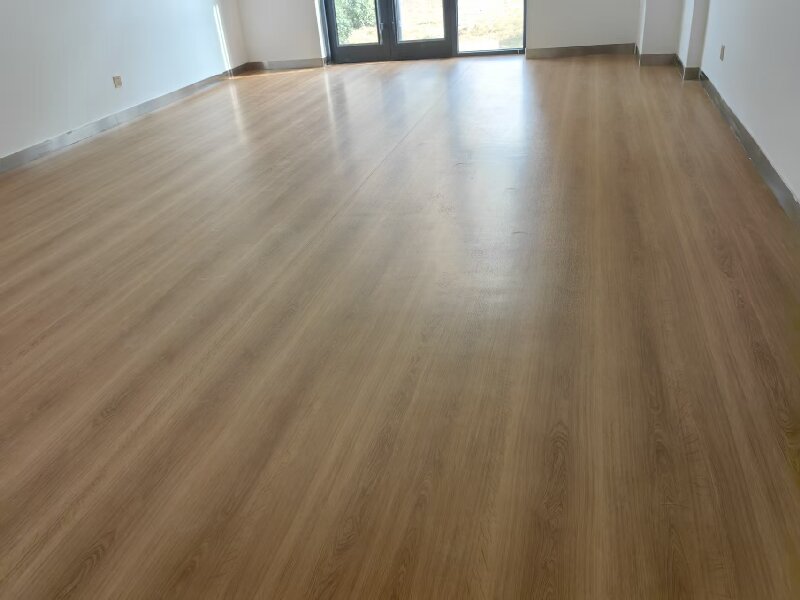
1. Performance Comparison: LVT Flooring vs Composite PVC Flooring
Performance is a key factor in commercial elastic flooring selection. Let's compare the core performance indicators of LVT flooring and composite PVC flooring:
1.1 Wear Resistance
LVT flooring usually has a wear layer thickness of 0.3mm to 0.7mm, and its wear resistance class can reach AC3 to AC5. It is suitable for medium to high-traffic commercial spaces such as small offices and retail stores. Composite PVC flooring has a thicker wear layer (0.5mm to 1.0mm) and a multi-layer composite structure, with a wear resistance class of AC4 to AC5+. It can withstand higher traffic volume and is more suitable for high-traffic commercial spaces such as large shopping malls, airports, and train stations.
In terms of long-term wear resistance, composite PVC flooring has a slight advantage, especially in spaces with heavy foot traffic and frequent equipment movement. However, high-quality LVT flooring (such as Dajulong's commercial-grade LVT flooring) can also meet the wear resistance requirements of most commercial spaces.
1.2 Elasticity and Comfort
Both LVT flooring and composite PVC flooring have good elasticity, which can reduce foot fatigue and provide a comfortable walking experience. LVT flooring has a softer texture, with an elastic modulus of 1500-2000 MPa, which is more suitable for spaces where people stand for a long time, such as beauty salons and reception areas. Composite PVC flooring has a slightly higher hardness (elastic modulus of 2000-2500 MPa), which has better load-bearing capacity and is more suitable for spaces with heavy equipment, such as supermarket warehouses and office machine rooms.
1.3 Water Resistance and Moisture Resistance
Both types of flooring are made of PVC materials, which have excellent water resistance and moisture resistance. They will not swell, deform, or rot when in contact with water, making them suitable for commercial spaces with high humidity, such as restaurants, bathrooms, and swimming pool corridors. However, it should be noted that the seams of LVT flooring (sheet type) need to be properly sealed to prevent water seepage. Composite PVC flooring (roll type) has fewer seams, and the water resistance is more reliable when installed correctly.
1.4 Installation Flexibility
LVT flooring (sheet type) is easy to install, with installation methods such as click-lock and glue-down. It can be installed quickly, and the construction period is short, which is suitable for renovation projects that require fast completion. Composite PVC flooring (roll type) requires professional installation, including cutting, gluing, and welding seams. The installation process is more complex and takes a longer time, but the installed flooring has a more integrated appearance and better stability.
2. Aesthetic and Design Options
Aesthetics is also an important consideration in commercial elastic flooring selection, as it affects the overall decoration style of the commercial space. LVT flooring has a rich variety of patterns and colors, including wood grain, stone grain, and abstract patterns. The surface texture is realistic, and it can perfectly simulate the appearance of natural materials such as hardwood and marble. It is suitable for commercial spaces that pursue a natural and warm style, such as coffee shops, bookstores, and boutique stores.
Composite PVC flooring also has a variety of patterns and colors, but its pattern reproduction degree is slightly lower than that of LVT flooring. It is more commonly available in solid colors, speckled colors, and simple patterns, which are suitable for commercial spaces that pursue a simple and professional style, such as offices, hospitals, and schools. In addition, composite PVC flooring can be customized with corporate logos and special patterns, which has certain advantages in brand promotion.
3. Cost Comparison
Cost is a key factor for many commercial projects. The price of LVT flooring is usually between $3 and $8 per square meter, and the installation cost is about $1 to $3 per square meter. The price of composite PVC flooring is between $4 and $10 per square meter, and the installation cost is about $2 to $4 per square meter (due to the need for professional welding). In general, LVT flooring has a lower initial cost, which is more suitable for projects with a limited budget. Composite PVC flooring has a higher initial cost but a longer service life (15-20 years, compared to 10-15 years for LVT flooring), so it has better cost-effectiveness in the long run.
4. Professional Selection Advice from Dajulong (Chinese PVC Flooring Brand)
Based on the above comparison, here is our professional commercial elastic flooring selection advice:
• Choose LVT flooring if: You have a limited budget, need a fast installation, pursue a natural and realistic appearance, and the commercial space has medium traffic (such as small offices, retail stores, beauty salons).
• Choose composite PVC flooring if: The commercial space has high traffic volume, needs to bear heavy equipment, requires long-term durability, and pursues a simple and professional style (such as large shopping malls, airports, hospitals, schools).
As a professionalChinese PVC flooring brand, Dajulong reminds you that regardless of which type of flooring you choose, you should select products from regular manufacturers to ensure product quality and after-sales service. Dajulong's LVT flooring and composite PVC flooring have passed strict quality inspections, with complete certifications and reliable performance. We can also provide tailored flooring solutions according to your commercial space's specific needs, including product selection, design, and installation.
Conclusion
There is no absolute "better" between LVT flooring and composite PVC flooring; the key is to choose according to your commercial space's specific needs, traffic volume, budget, and aesthetic preferences. Through this LVT vs composite PVC flooring comparison, we hope to help you have a clearer understanding of the two types of flooring and make an informed commercial elastic flooring selection decision. If you need further advice or product information, please feel free to contact Dajulong, your trusted Chinese PVC flooring brand.